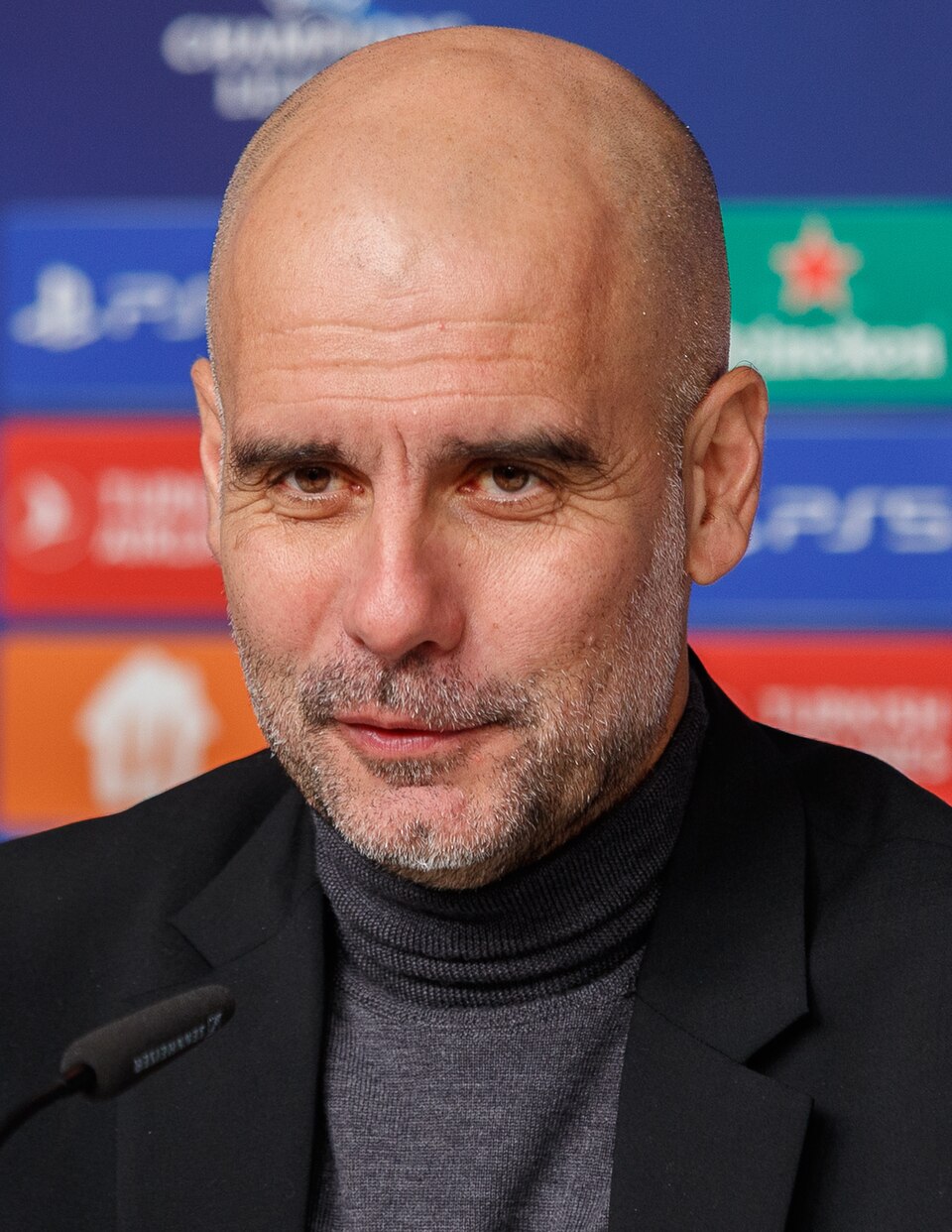
Pep Guardiola: Most Successful Manager in Man City History
In the pantheon of football managers, few names resonate with the consistent success, tactical innovation, and transformative impact as profoundly as Pep Guardiola. His journey from the Barcelona B team to the pinnacle of European football has been nothing short of extraordinary, but it is his tenure at Manchester City that has cemented his legacy as arguably the most dominant force in modern football. Guardiola didn't just win trophies at City; he redefined what was possible, creating a new benchmark for excellence and etching his name as the most successful manager in the club's illustrious history.
The Guardiola Revolution: A New Era of Football
Before Guardiola's arrival, football was experiencing an era where pragmatic, counter-attacking styles often prevailed, emphasizing quick transitions from defense to attack as the decisive moments. Guardiola, however, emerged as a visionary, demonstrating a fundamentally different, yet equally effective, approach. His philosophy, rooted in possession-based play, relentless pressing, and intricate positional rotations, challenged the prevailing wisdom and proved that there was another, more aesthetically pleasing, way to achieve dominance.
Barcelona: Laying the Foundation
Guardiola's managerial debut at Barcelona was a seismic event. Taking charge of the senior team in 2008, he inherited a squad with immense talent but also instilled a tactical discipline and hunger that transformed them into one of the greatest club teams ever assembled. During his four seasons at the Camp Nou, he won an astonishing 14 trophies, including three La Liga titles and two UEFA Champions League crowns. The Catalan giants also clinched three Supercopa de España, two Copa del Rey, two UEFA Super Cups, and two FIFA Club World Cups. It was here that the world first witnessed the genius of Guardiola, a man who could blend tactical prowess with an unwavering commitment to a beautiful, attacking style of football. His tenure laid the groundwork for his global recognition, setting the stage for future triumphs.
Bayern Munich: Proving Adaptability and Expanding Horizons
Eyebrows were raised when Guardiola decided to take the helm at Bayern Munich in 2013, especially after the German club had just secured a historic treble, including the Champions League. Many wondered if his unique brand of football, so intrinsically linked with Lionel Messi, Andrés Iniesta, Xavi, and Sergio Busquets, could thrive outside the familiar confines of his home country and without the generational talents he had cultivated. Could he adapt his philosophy to a different culture, a new league, and a squad that had already conquered everything?
Guardiola emphatically answered these questions. Far from merely maintaining Bayern's status quo, he set out to elevate an already world-class team. He made only one signing in his initial transfer window, challenging the conventional wisdom that a new manager must overhaul a squad from a position of strength. Instead, Pep absorbed the best of Bayern's established footballing institution and infused it with his innovative tactical ideas. He improved every single *jugador* (player) under his tutelage, teaching them new positions and demonstrating alternative ways to achieve collective success. The result was a captivating style of football that enchanted Germany, leading Bayern to three consecutive Bundesliga titles and two domestic doubles. He also guided them to the UEFA Champions League semi-finals in all three seasons, solidifying his reputation as a manager capable of adapting and excelling in any top-tier environment.
Dominance at the Etihad: Pep's Manchester City Legacy
When Pep Guardiola arrived at Manchester City in 2016, expectations were sky-high. He wasted no time in making his mark, winning his first 11 matches and earning two Premier League Manager of the Month awards in quick succession. This immediate impact was a clear signal of the transformative era that was about to unfold at the Etihad Stadium. For an in-depth look at his tactical influence, read How Pep Guardiola Revolutionized Manchester City's Football.
Record-Breaking Seasons and Unprecedented Success
Guardiola's second season (2017/18) was a watershed moment, as he guided the Citizens to the Premier League title and the Carabao Cup in a dazzling campaign that shattered numerous records. City became the first team to reach 100 points in a Premier League season (the 'Centurions'), securing the title with five games to spare and setting new benchmarks for wins (32), goals (106), and goal difference (+79). His exceptional leadership earned him four consecutive Manager of the Month awards, the Premier League Manager of the Season, and the LMA Manager of the Year.
The 2018/19 season saw City achieve an unprecedented domestic treble, clinching the Premier League, FA Cup, and Carabao Cup, along with the Community Shield. This remarkable feat made Guardiola the most successful manager in the club's history, accumulating six trophies in just three seasons. The relentless pursuit of perfection continued, with more Carabao Cups and Premier League titles following. His ultimate triumph came in the 2022/23 season when Manchester City finally lifted the elusive UEFA Champions League trophy, completing a historic treble and cementing their status as the dominant force in European football. This triumph was the culmination of years of hard work, strategic investment, and Guardiola's unwavering vision.
Developing the Jugadores: Guardiola's Impact on Players
One of Guardiola's most remarkable talents is his ability to elevate the performance of every *jugador* (player) he works with. At Manchester City, he has taken already talented individuals and transformed them into world-beaters, often by asking them to play in unconventional roles or demanding an unparalleled level of tactical understanding. Kyle Walker, previously a traditional right-back, has evolved into a versatile defensive lynchpin capable of playing centrally. John Stones, once prone to errors, has become a masterful ball-playing defender and an integral part of City's midfield rotations. Bernardo Silva and Phil Foden, among others, have flourished under his guidance, becoming vital components of his intricate system.
Guardiola doesn't just manage; he coaches, teaches, and inspires. He provides his players with a clear framework, allowing them to express their individual brilliance within a highly structured collective. His meticulous attention to detail, rigorous training methods, and relentless pursuit of improvement mean that every *jugador* at Manchester City is constantly pushed to their limits, evolving their game and contributing to the team's relentless success. This commitment to player development is a cornerstone of his philosophy and a key reason for City's sustained dominance.
Beyond Trophies: The Guardiola Philosophy and Lasting Impact
Guardiola's legacy extends far beyond the impressive collection of silverware in the Etihad trophy cabinet. He has left an indelible mark on the Premier League and global football, influencing coaching methodologies and tactical approaches across the spectrum. For a broader overview of his career, explore Pep Guardiola's Journey: From Barcelona to Manchester City.
Tactical Masterclass: How Pep Revolutionized the Game
His tactical innovations have become widely adopted, from the inverted full-back to the false nine, and from structured build-up play to aggressive counter-pressing. He has shown that possession is not merely about hogging the ball, but about controlling the game, creating opportunities, and minimizing defensive vulnerabilities. His teams play with an intensity and fluidity that few can replicate, and their ability to adapt tactics mid-game demonstrates the depth of his strategic thinking and the intelligence he instills in his squad. Practical tips for aspiring coaches or even team leaders can be drawn from Guardiola's approach: emphasize clarity in roles, foster adaptability, and relentlessly pursue marginal gains.
Guardiola's impact is also evident in the standard he has set. His City teams have consistently pushed the boundaries of what is considered achievable in the Premier League, forcing rival clubs to raise their own games and invest more strategically to compete. This competitive pressure has undoubtedly contributed to the Premier League's status as one of the most exciting and challenging leagues in the world.
In conclusion, Pep Guardiola's reign at Manchester City has been an epoch-making period in football history. From his early triumphs at Barcelona to proving his adaptability at Bayern Munich, every step of his journey has been characterized by innovation, success, and a profound influence on the game. At Manchester City, he has not only amassed an astonishing collection of trophies, including the coveted UEFA Champions League, but he has also cultivated a unique playing style, transformed countless *jugadores*, and reshaped the landscape of English football. His meticulous planning, tactical genius, and unwavering drive have solidified his position as the most successful manager in Manchester City's history and one of the greatest football minds of all time.