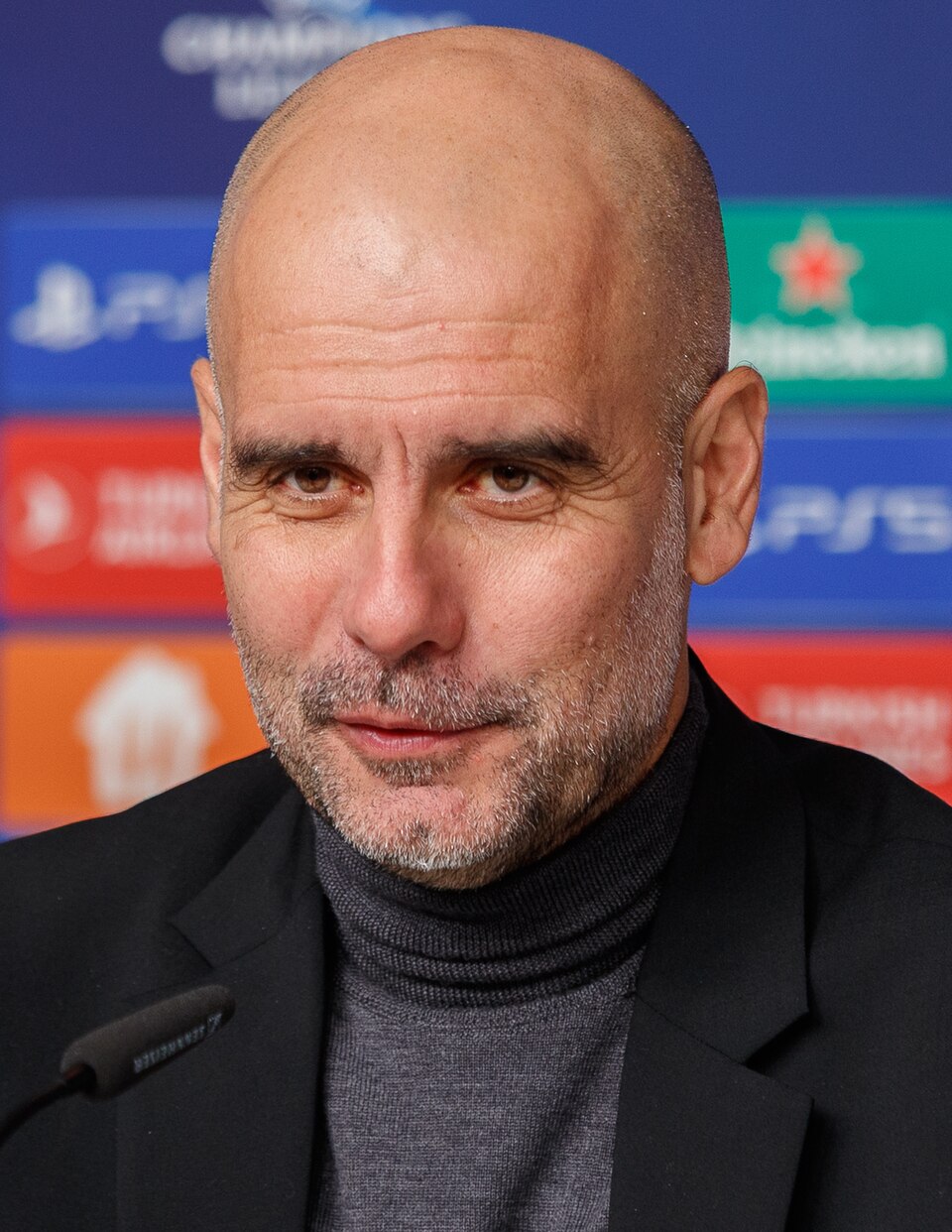
How Pep Guardiola Revolutionized Manchester City's Football
The arrival of Pep Guardiola at Manchester City in 2016 wasn't just the appointment of another world-class manager; it marked the beginning of a profound transformation, not only for the club but for English football itself. Having already left an indelible mark at Barcelona and Bayern Munich, Guardiola brought with him a philosophy that challenged the prevailing footballing wisdom of the era. His vision transcended mere tactics; it was a comprehensive re-engineering of how a club operates, how players think, and ultimately, how games are won.
Prior to Guardiola's tenure, English football often celebrated a pragmatic, counter-attacking style, where the transition from defence to attack was considered the most decisive phase. Guardiola, however, demonstrated "another way." He proved that sustained possession, intricate passing, relentless pressing, and fluid positional play could not only yield results but could do so with an aesthetic appeal that captivated audiences. This wasn't just about winning; it was about dominating with style, reshaping the very identity of Manchester City from a competitive club into a footballing empire built on innovative principles.
The Tactical Mastermind: Redefining Football Philosophy
Guardiola’s journey to the Etihad was paved with unparalleled success. At Barcelona, he spearheaded an era of dominance, clinching three La Liga titles in four seasons and lifting the UEFA Champions League twice, among a host of other domestic and continental honours. His brand of *juego de posición* (positional play) became synonymous with the Catalan giants, featuring an almost hypnotic control of the ball and suffocating pressure off it. This foundational philosophy, however, faced skepticism when he ventured beyond his native Spain.
His move to Bayern Munich in 2013 was met with raised eyebrows. Bayern had just completed a historic treble, conquering the Champions League, Bundesliga, and DFB-Pokal. The fundamental question echoed across the footballing world: Could Pep succeed without the likes of Lionel Messi, Xavi, Andres Iniesta, and Sergio Busquets? Could he adapt his intricate methods to a new league, a new culture, and a new language? Guardiola answered emphatically. Far from merely maintaining the status quo of a triumphant team, he sought to elevate already world-class players to an even higher plane. He made only one significant signing in his first transfer window, demonstrating his belief in improving existing talent rather than wholesale changes. He absorbed the best of Bayern’s institutional strength and seamlessly blended it with his own groundbreaking tactical concepts, producing one of the most compelling styles of football Germany had ever witnessed. This proved that his revolutionary approach was not contingent on specific individuals but on a universal footballing intelligence that he instilled in every *jugador Manchester City Pep* would later inherit.
Building the Blue Machine: Pep's Impact on the City Squad
When Guardiola finally arrived in Manchester, the foundations for a revolution were set. His initial impact was immediate and striking, with City winning their first 11 competitive matches. Despite a trophyless first season – a rare occurrence for Guardiola – it was a period of intense learning and adaptation for both the manager and his players. The subsequent 2017-18 season saw the fruits of this labour ripen into an unprecedented Premier League campaign. Manchester City not only won the title but broke numerous records, becoming the first team to reach 100 points, record 32 wins, and score 106 goals. This wasn't just success; it was domination on a scale rarely seen in English football.
Guardiola's genius lies in his ability to not just sign top talent but to fundamentally improve the players already at his disposal, pushing them to excel in new dimensions. A prime example of this transformative touch is seen in players like Raheem Sterling, who developed a clinical edge under Pep, or John Stones, who evolved into a technically gifted ball-playing centre-back capable of stepping into midfield. Kevin De Bruyne and Bernardo Silva, already exceptional, became even more tactically astute, mastering the art of finding space and dictating tempo.
The 2018-19 season cemented City's place in history as they secured an unprecedented domestic treble, winning the Premier League, FA Cup, and Carabao Cup, alongside the Community Shield. This period saw Guardiola become the most successful manager in the club’s history, collecting six trophies in just three seasons at that point. His influence extended beyond individual players to the collective mentality of the squad, fostering a relentless pursuit of excellence and an unshakeable belief in their system. To learn more about this incredible achievement, read
Pep Guardiola: Most Successful Manager in Man City History.
The Evolution of the Modern Player Under Pep
Perhaps one of the most profound aspects of Guardiola's revolution at Manchester City is how he has redefined the role and expectations of the modern *jugador*. He demands tactical versatility, technical precision, and an almost insatiable hunger for improvement from every individual.
* **Positional Fluidity:** Players are not confined to traditional roles. Full-backs often invert into midfield, centre-backs step out to initiate attacks, and forwards drop deep to link play. This creates a constantly shifting, unpredictable system that is difficult for opponents to contain.
* **High Pressing:** Every player, from the striker to the goalkeeper, is an integral part of the defensive mechanism. The high press, aimed at winning the ball back quickly and high up the pitch, requires immense physical conditioning and tactical discipline.
* **Technical Excellence:** Ball retention and precise passing are paramount. Guardiola drills his players to be comfortable in tight spaces, make quick decisions, and execute passes with pinpoint accuracy, regardless of their position.
* **Mental Fortitude:** The demands of playing under Guardiola are immense. Players must possess strong mental resilience to absorb complex tactical instructions and perform under constant pressure.
The archetypal *jugador Manchester City Pep* seeks is not merely talented but possesses a high football IQ and an unwavering commitment to the collective. He empowers them to understand the 'why' behind every movement, fostering a deeper connection to the game. This holistic development ensures that each player contributes not just with their individual skill, but with a profound tactical understanding that elevates the entire team. To trace his incredible trajectory and philosophical consistency, delve into
Pep Guardiola's Journey: From Barcelona to Manchester City.
A Legacy of Innovation and Unrivaled Success
Pep Guardiola's revolution at Manchester City is far more than a collection of trophies. It is a testament to his unwavering belief in an attacking, possession-based philosophy that has fundamentally altered the landscape of English football. He has not only created one of the most dominant teams in recent memory but has also raised the bar for tactical innovation, player development, and club identity. His impact is visible not just in the records broken and silverware accumulated, but in the intelligent, adaptable, and technically brilliant players he has molded. Manchester City, under Guardiola, has become a beacon of modern football, demonstrating that with courage, conviction, and relentless hard work, there is always "another way" to achieve greatness.